


Previous posts on this topic are here (The Army settles in at Montrose Point), here (When the lakefront was for warbirds), here (When Montrose was for bathing), and here (The Magic Hedge takes shape).
Back in 1995, the Magic Hedge was the place to be if you wanted to see warblers in Chicago. While the site had come a long way since the Army left in 1971, it was just one cluster of shrubs that provided the food and shelter that birds require. It was the kind of place that would eventually be called a migrant trap, for its honeysuckle was so attractive that the birds just couldn’t pass it up.
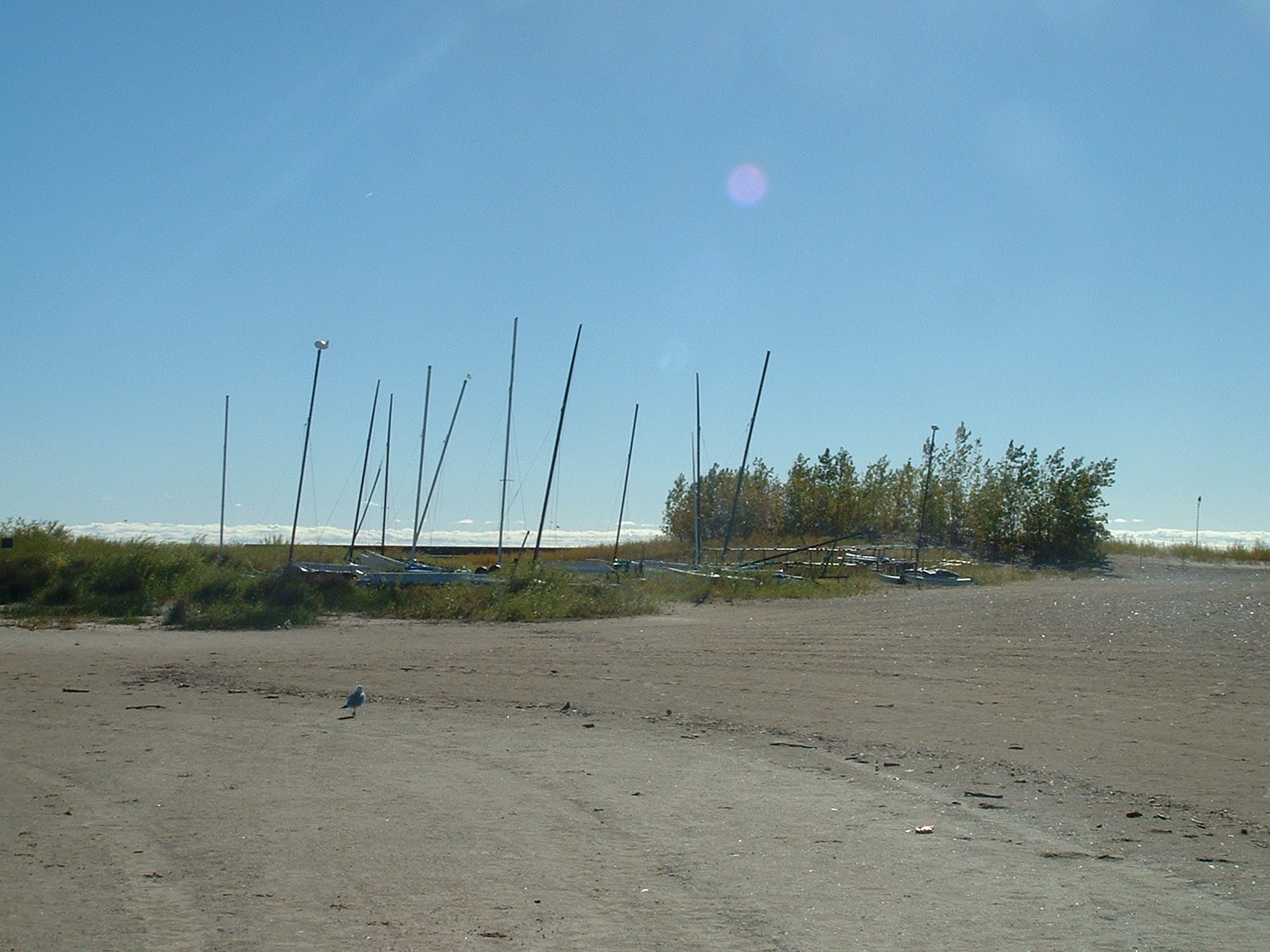
It was a different story out on barren Montrose Beach, which became a stronghold for Piping Plovers and other shorebirds decades later.
“On rare occasions, you would get a Piping Plover. But Waukegan Beach was the place to get them in those days,” says longtime birder Al Stokie. “I don’t think people were looking for them as much, and maybe the reason was the beach wasn’t as fancy as it became.”
The beach was changing, though. For decades, the Park District plowed sand toward the eastern end of the beach. It made for a smooth beach for the sun bathers and swimmers. Eventually a few cottonwoods and willows had appeared in the heap of sand at the east end. Finally, it was a daily birder named Kanae Hirabayashi who stopped the bulldozers from plowing under the trees.
“It was really miraculous once they stopped grooming the beach,” says Judy Pollock, then President of the Bird Conservation Network. “It’s funny, I thought they would just groom the beach forever. You don’t really think these things can change.”
Leslie Borns and her husband, John Purcell, would go birding regularly at Montrose Point.
“We started looking at plants when there weren’t many birds,” Borns says. “I couldn’t identify these green fingers in the sand. I knew a lot of plant people and asked them about Lake Shore Rush.”
The discovery of two endangered plants—Lake Shore Rush (Juncus balticus), along with Sea Rocket (Cakile edentula) by a woman named Margo Milde—meant the park district had to take action. Lake Shore Rush hadn’t been seen on Chicago’s lakefront since 1946, and Sea Rocket was on the state threatened list.
The Chicago Tribune ran a feature story, “Singing sands of time,” on the cover of the Metro section on December 3, 2000, that described two “baby dunes” that had appeared at Montrose due to “benign neglect” by the Park District. Early on the hope was that shorebirds—plovers and sandpipers—might eventually use the newly created habitat. “They use these plants on the beach for cover,” said Borns at the time, 19 years before Piping Plovers would eventually nest. “I’d like to see the area protected and preserved. These dune systems that are emerging are very fragile ecosystems.”
“I became aware of Leslie, because we were doing a lot of work to revive the Magic Hedge, and the Park District was spending a lot of funds toward restoration,” said Mary Van Haaften, who was then Natural Areas Manager with the Chicago Park District. “In the City of Chicago to find state listed or state threatened species, it really is something in an environment like that, a Cold War site. Any time something special came up it was just so rare and wonderful.”
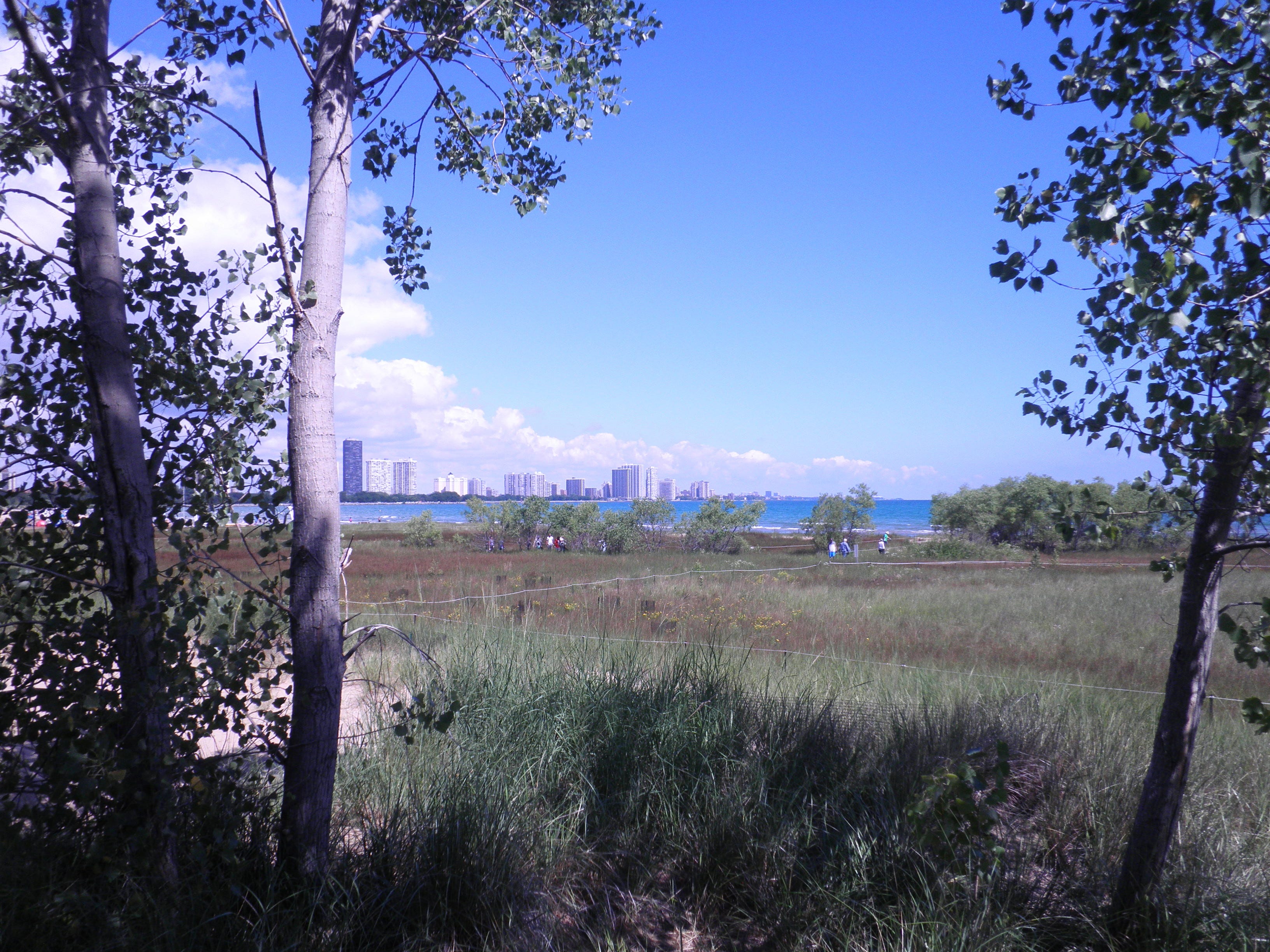
Discussions began among birding clubs and the park district. The initial goal was to get a fence in place to keep people and dogs from trampling the foliage. It was the first of many examples of advocates and volunteers taking steps to revert the beach back to a coastal dune habitat.
“I started to develop a vision because [the land] was starting to evolve, and I wanted to recognize and enhance an ecological process,” said Borns, who soon became volunteer site steward. “I thought let’s fence the whole end of the beach and let things go.”
Susanne Masi, coordinator of Plants of Concern, a Chicago Botanic Garden program, noticed more rare plant species emerging and documented them. Lake currents and wind were pushing native seeds south from places like Wisconsin.
“It was pretty surprising. [Dune systems] vary because of lake levels and winds. They are quite fluid environments,” Masi says. “With low lake levels, a record from 1999 through about 2014, that just allowed for all of this habitat to develop in a very short period of time.”
“The sedge diversity there is absurd, the number of rare sedges there,” notes Greg Spyreas of the Illinois Natural History Survey. “It’s extraordinary how they got there, where did they come from? It doesn’t exist even 40 miles near there.”
“It wasn’t just that it got protected from grooming and things like that,” adds Eric Ulaszek, now retired from the Illinois Natural History Survey. “It was volunteers who really got involved and got things done. [Without volunteers] it would probably be a thicket with tough natives and invasives crowding out what’s unique there.”
This small but active group of citizens came together just as Mayor Richard M. Daley had made environmental issues a priority for the city.
“We really started opening up the areas and that is when these conservative species started appearing, sedges, forbs, plants, listed species and others,” Borns says.
“Montrose kind of kicked the whole thing off,” Pollock says. “Without [Mayor Daley], none of this really would have happened.”
“When I was there, we had 50 designated Nature Areas, ranging from the Magic Hedge to the [Montrose] dune habitat, to native plant gardens, and the Jackson Park lagoon area,” Van Haaften says. “That was Mayor Daley, he took a great interest in wildlife to his credit.”
Spyreas’ job is to map endangered species and create environmental impact statements. His first visit came when he was assigned to visit the dunes and meet with Borns.
“I had never seen anywhere like that in my entire life,” he says. “Literally in the middle of one of the densest cities and one of most well used parks and it had just kind of sprung up.”
“In Illinois, we have so little natural lakefront,” Masi says. “For that reason, and the fact that it is so developed, it makes Montrose and other sites so very special.”
The dunes were named a state natural area in 2005 because of the quality of the habitat. The fenced-off area not only was good for plants but good for birds also—particularly shorebirds that travel vast distances and need a place to rest and forage undisturbed. Those have been the conditions for the most part ever since.
“You’re usually losing species, losing habitats,” says Spyreas. “It’s a war of attrition, losses instead of wins. [Montrose Dunes] are one of a handful of wins.”
Piping Plovers are a sort of grail bird around the Great Lakes in that only a few dozen pairs remained in the early 21st century. By the 2010s, though, numbers were rebounding and the dunes were seeing more and more. Each year from 2010 through 2018 recorded at least one Piping Plover at the beach.
“For me, this was a very big deal, that you could transform habitat and create habitat and such a dramatic change in the landscape, which led directly to the Piping Plovers,” Pollock says.
Piping Plovers nested at Montrose Beach in 2019, the first in Chicago in 70-plus years, and continue to be a fixture. That first pair, as many readers know, was Monty and Rose.
“Much credit is owed to Leslie [Borns],” Van Haaften says. “She noticed that first tiny plant, took action, and made something possible that even I didn’t believe was possible—that someday Piping Plovers would return.”
Read related posts here:


That was a great summary of how Montrose Dunes evolved. Before Monty and Rose's arrival, when my husband and I were younger with stronger backs we would volunteer with a dedicated group of volunteers on Saturday mornings. Leslie Borne would lead us around and enthusiastically described the rare shore plants in bloom. We would pick up trash and do weeding and planting. What a great group of volunteers. Thank you to all the volunteers. Thank you Leslie.