


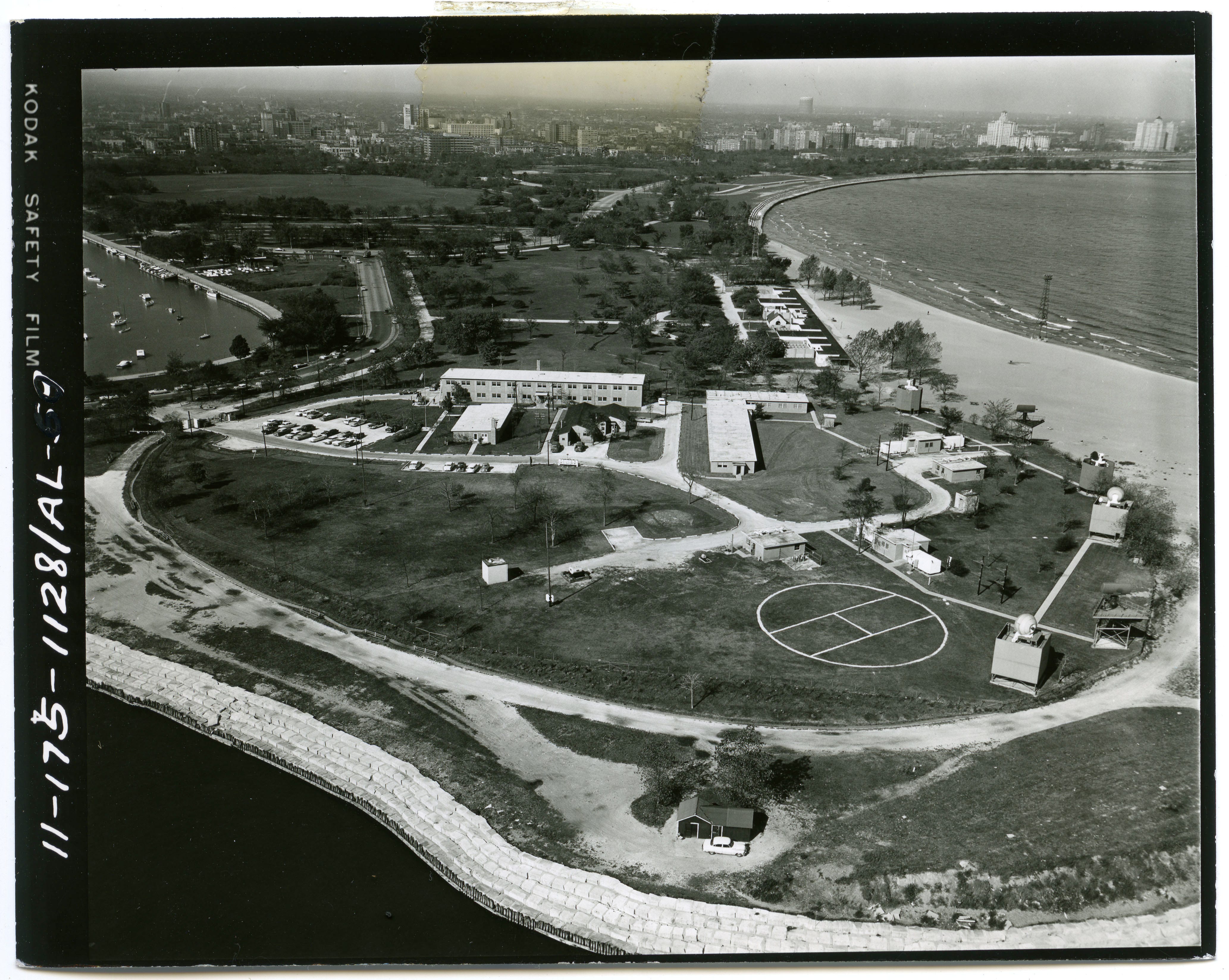
When last we wrote, the Army had just installed a Nike missile base spanning Chicago’s Montrose Point and Belmont Harbor. The Integrated Fire Control, command center, and barracks were positioned at Montrose Point, and the missiles themselves were 24 feet underground in magazines just south of Belmont Harbor. The military had taken over the parkland during World War II and soon after the completion of the Montrose-to-Foster extension, essentially a landfill that pushed the shoreline east by nearly 1 mile.
Army Spc. Richard Liepold of Mishawaka, Indiana, was just 20 years old when he was stationed at a Nike base in Arlington Heights, Illinois.1 Liepold, small in stature and often with a mischievous grin, was the primary subject of a 1959 article that appeared in the Chicago Daily Tribune. He was perhaps typical of the young men at missile defense sites across the country, including at Montrose Point. The experience of being a missile man was generally an exercise in monotony, though Liepold noted that “there is usually too much to do around here. And there is plenty to keep us occupied off duty.” A photo accompanying the article shows Liepold playing pool in the recreation hall, and it’s also said that he and others go into the town of Arlington Heights for fun off-duty. There was a television set in the day room, a library, and a space for ceramics and wood crafts.
Liepold’s work day began at 5:30 a.m., and he was in the chow line for breakfast from 6 to 7 a.m. By 7:45 a.m., he was awaiting orders as he was headed to the missile pits. The article notes: “The men check every missile, testing every fin or vane, every screw, every large or small part, making sure that they are completely clean.” Sometimes, though, the men were just sweeping up or mowing the grass. Practice alerts and crew drills were done weekly, and every four days one of the batteries would get a “15-minute standby” order. The battalions had to be ready for sneak planes all day, every day.
Landscaping would seem to be the furthest thing from military planners’ minds, but outcry about blighted views may have brought shrubbery to the fore. It’s that vegetation that would become the Magic Hedge and a haven for birds (and birders) by the 1980s. Soon after the bases opened, residents spoke out against unsightly radar towers and other structures, all surrounded by barbed wire fencing. A lack of lake views and a decrease in property values were a real concern. There was a lot to be riled up about, what with the ceding of city land to the military rent free.
Hyde Park resident Leon Despres (pronounced de-pray), who would go on to become a longtime alderman, was among those objecting to the missile bases.2 Despres spoke at a park district hearing on the matter in 1956, concerned about the lakefront and places like nearby Promontory Point, the command center for the Nikes placed in Jackson Park to the south. Despres was a fixture of Chicago independent politics for decades and became something of an icon. A young Bernie Sanders once worked on his aldermanic election, and Despres served as a political mentor to a young organizer named Barack Obama. Upon Despres’ death in 2009, the then-President issued a statement: “Through two decades on the Chicago City Council and a long lifetime of activism, Leon Despres was an indomitable champion for justice and reform. With an incisive mind, rapier wit and unstinting courage, he waged legendary battles against the corruption and discrimination that blighted our city, and he lived every one of his 101 years with purpose and meaning. I have been blessed by his wise counsel and inspired by his example.”

Despres was among the pacifists and environmentalists speaking out in opposition along with the Illinois Audubon Society and community organizations based in Hyde Park. Advocates suggested that a battery be moved to a landfill island off-shore from Hollywood Avenue on the Far North Side. Perhaps the fight against the Nike installations was what helped Despres get elected 5th Ward alderman in the first place. Without Leon Despres, perhaps Obama doesn’t get elected State Senator.
Around the same time the Army was facing another opponent: the Air Force. The Army’s second-generation Nike missiles, or Hercules, had a range of about 75 miles; the Air Force’s Bomarc missiles had a range of 200 miles.3 The Air Force had been criticizing the effectiveness of the Nikes—and specifically the effectiveness of the Chicago air command. One wonders if the critiques were a factor in the demise of the Nikes, even as the Army rolled out Ajax, Hercules, and eventually Zeus missiles. The first bases to close in the Chicago area were as early as 1962, at least in the case of the Burnham Park site.4
But likely the bigger factor was the development of the intercontinental Minuteman missile. The launch of Sputnik had shaken the U.S. military. It was now possible that an ICBM could be fired from the Soviet Union toward the mainland United States, and that a U.S.-based missile could intercept it from most anywhere. The Army increasingly was turning to the Minuteman, stationed in places like Grand Forks, North Dakota, and Malmstrom, Montana.
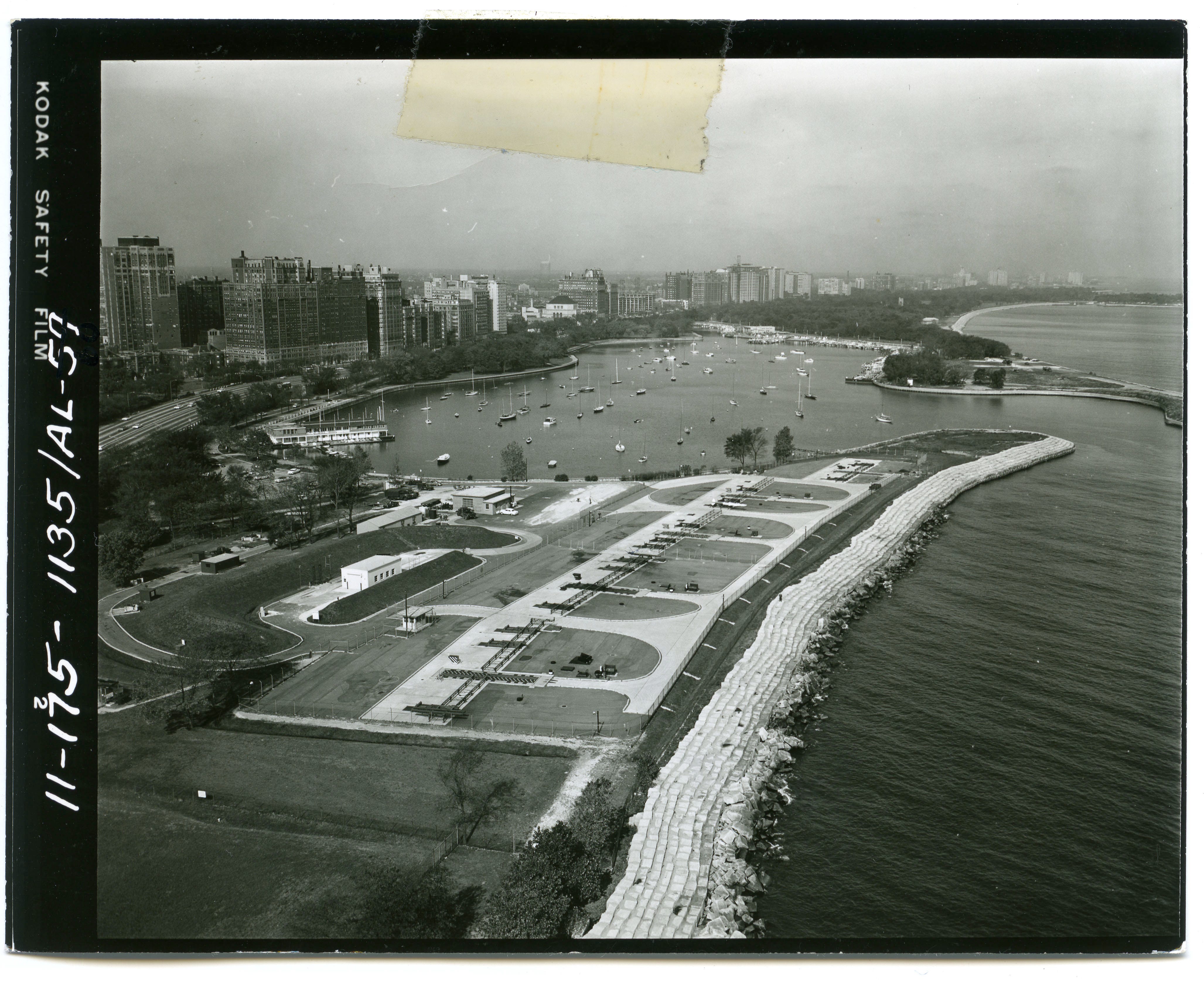
The number of Nike sites were gradually decreasing in the Vietnam years. Some closed in the Chicago-Gary defense area in the early ’60s, others closed as late as 1974. After 15 years or so in operation, the Nike missile site spanning Belmont Harbor and Montrose Point was announced to be closed in June of 1971. With priorities shifting and the missile bases nearly obsolete, the Department of the Army’s historical summary from that year captured the moment well:
“During fiscal year 1971, with combat operations in Vietnam drastically reduced…the dimensions of a new Army challenge began to emerge. How could the Army, on the heels of an unpopular war, in the face of antimilitary sentiment and social ferment, with reduced strength and appropriations, and without resort to the draft, maintain a strong, viable, and professional ground force to meet its current and future roles and missions?5”
Wrecking firms were hired for $200,175 by the Park District Board with Defense Department funds. The demolitions, including blasting of underground bunkers, were completed on July 19, 1971, the date the Army terminated its lease. Aerial photos show that within two years the site at Montrose was virtually erased. The hedge was still standing, though, and it’s visible in the middle of this photo.
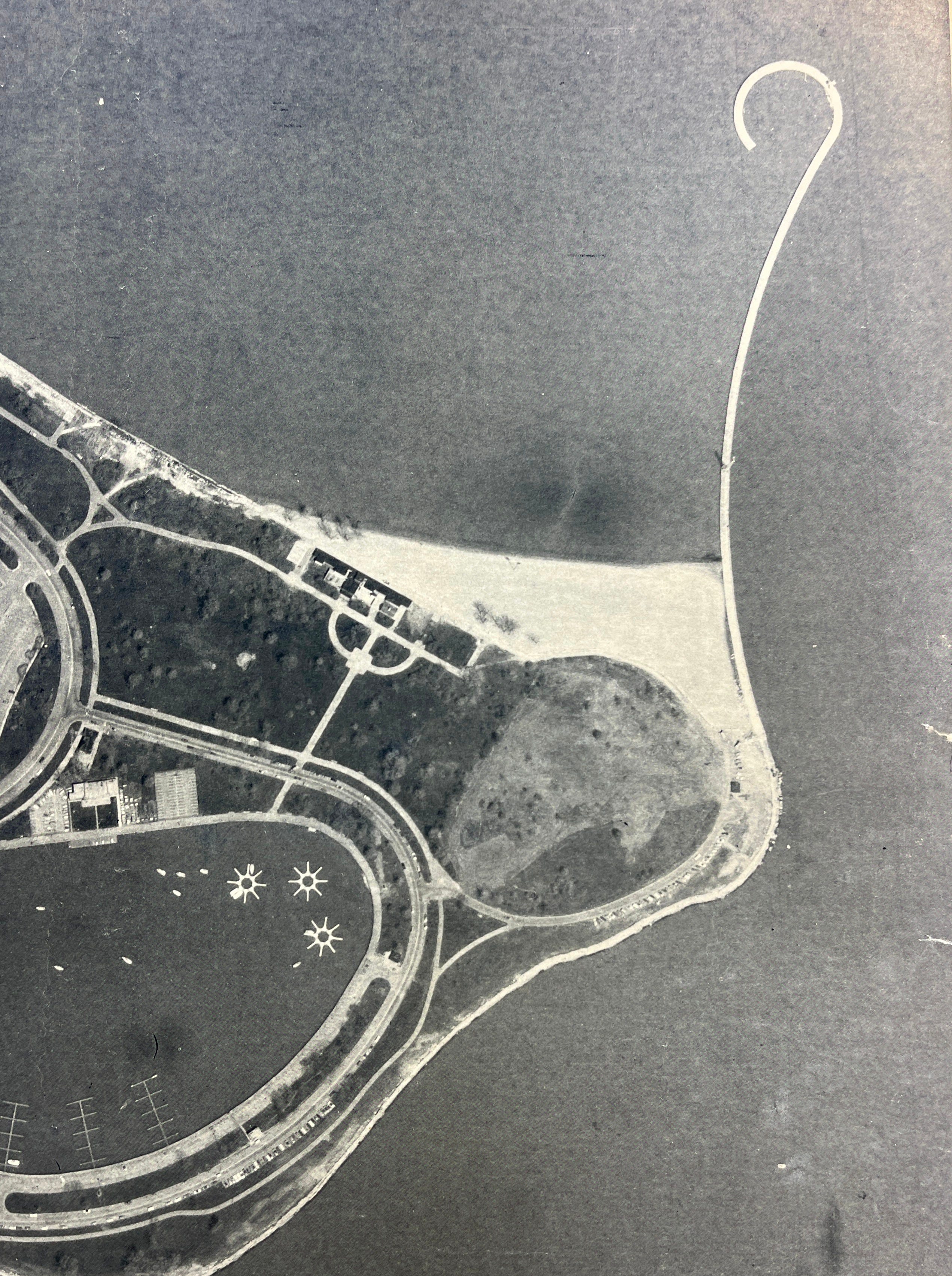
The Army had dramatically altered the character of Montrose Point. But the changes wouldn’t be permanent, as anyone can tell you who’s been there recently. Next time we’ll look at the arrival of birds (and birders) at the Magic Hedge, and the making of a hotspot that draws birdwatchers from across the country.

Enjoying these posts? Buy me a coffee to make a one-time contribution. Your support makes This Week in Birding possible.
Read the other stories in this series:


“A Missileman’s Day: Guarding City from Enemy Planes: An Exacting Task Keeps Soldier Busy,” Chicago Daily Tribune, October 4, 1959.
“Lake Land Fill Suggested for Nike Units,” Chicago Daily Tribune, January 1, 1955.
Carter, Donald. From New Look to Flexible Response: The US Army in National Security 1953 – 1963, 2023.
Retrieved February 6, 2026, https://armourersbench.com/2019/08/25/bomarc-missile-the-first-long-range-surface-to-air-missile/
“Department of the Army Historical Summary, Fiscal Year 1971,” Center of Military History, Washington DC.