


Previous posts on this topic are here (The Army settles in at Montrose Point), here (When the lakefront was for warbirds), and here (When Montrose was for bathing).
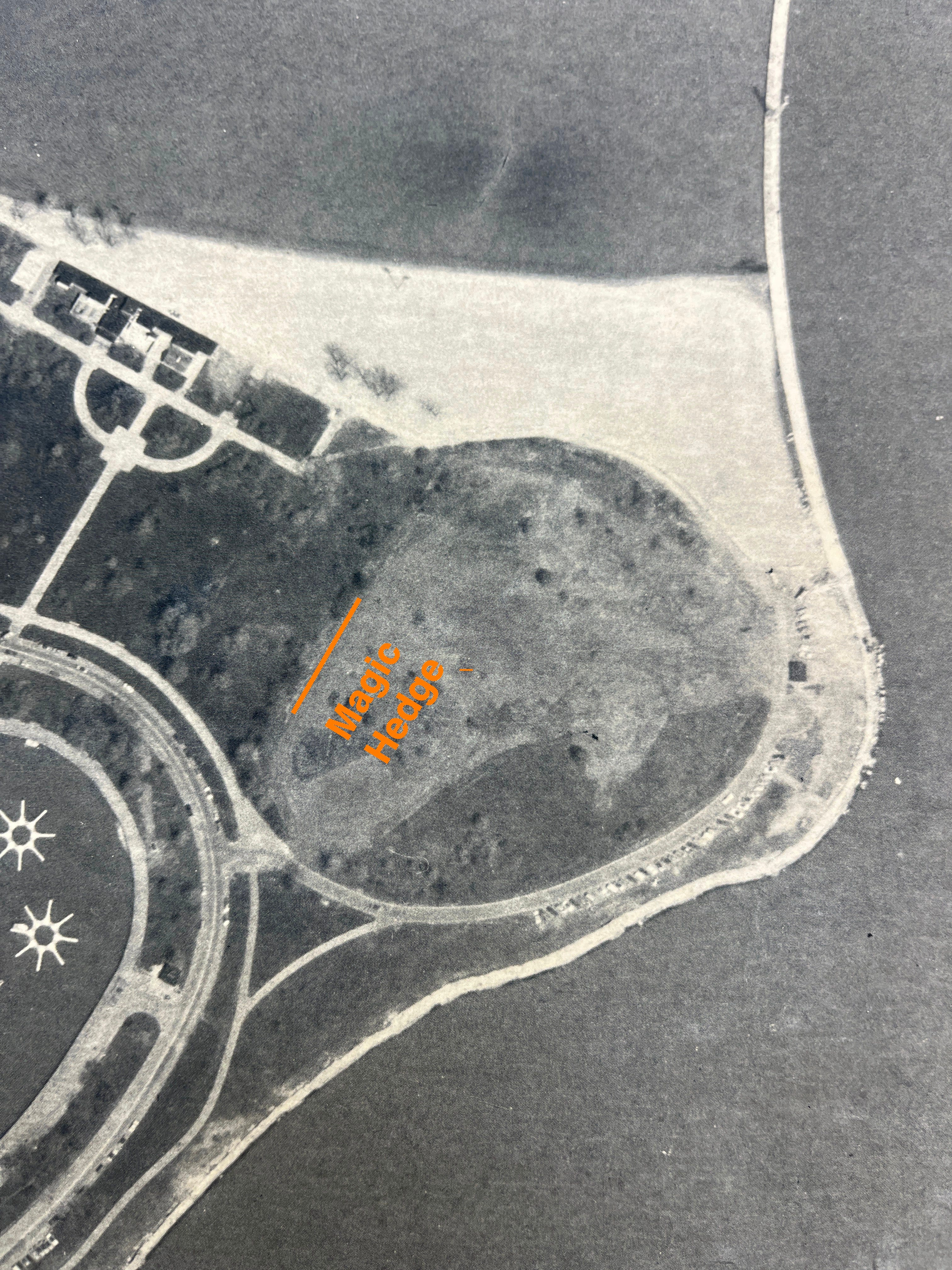
When last we wrote, the Army had departed its barracks at Montrose Point in 1971 but left the Magic Hedge behind. The park district, with federal funds, hired wrecking firms to raze the old structures and restore the point to a modicum of nature. Within 20 years or so, the hedge was considered the best place in Illinois to see warblers in spring migration.
Reverting the point to something truly natural, though, didn’t happen right away. The park district failed to spend all the money the Army gave them for restoration.1
“All they did with those sites was razed the buildings, grow some grass and plant a few trees,” said Dale Pontius, a longtime user of Jackson and Burnham parks, said at the time.
The Army had left not with a proverbial bang but with a whimper. Recall that many environmentalists and pacifists were upset by the missile bases in the parks in the first place.
“The only ‘shots’ fired in anger in connection with the whole Nike program have been verbal potshots the public has taken at us for taking all that land in the first place,” said an Army Corps of Engineers spokesman in 1975.
A previous post took a look at the shrubs that became the Magic Hedge in detail. The ragged line of honeysuckle was planted to cover up the unsightly military command center. The site was spacious, grassy and devoid of almost any natural habitat. It drew in birds, though, because of its location on a promontory. It takes less energy for birds to fly directly from places like Indiana Dunes over Lake Michigan to Montrose Point than to hug the coastline or head inland.
“The area right next to the Magic Hedge, it was not a prairie or a field, it was a lawn,” says longtime birder Al Stokie.2 “You’d go over to the hedge and in those days that was about all you could go to, they were the only trees there. It had a big lawn and short grass, like walking in the lawn in front of your house.”
The first published reference to the Magic Hedge came in the Chicago Tribune in 1988.3 “The Magic Hedge, a row of bushes at the tip of Montrose peninsula that has a reputation for attracting bizarre wanderers, lived up to its name again this year. The most unusual was a magnificent frigate, a large tropical bird likely blown thousands of miles from the Gulf of Mexico by Hurricane Gilbert.”
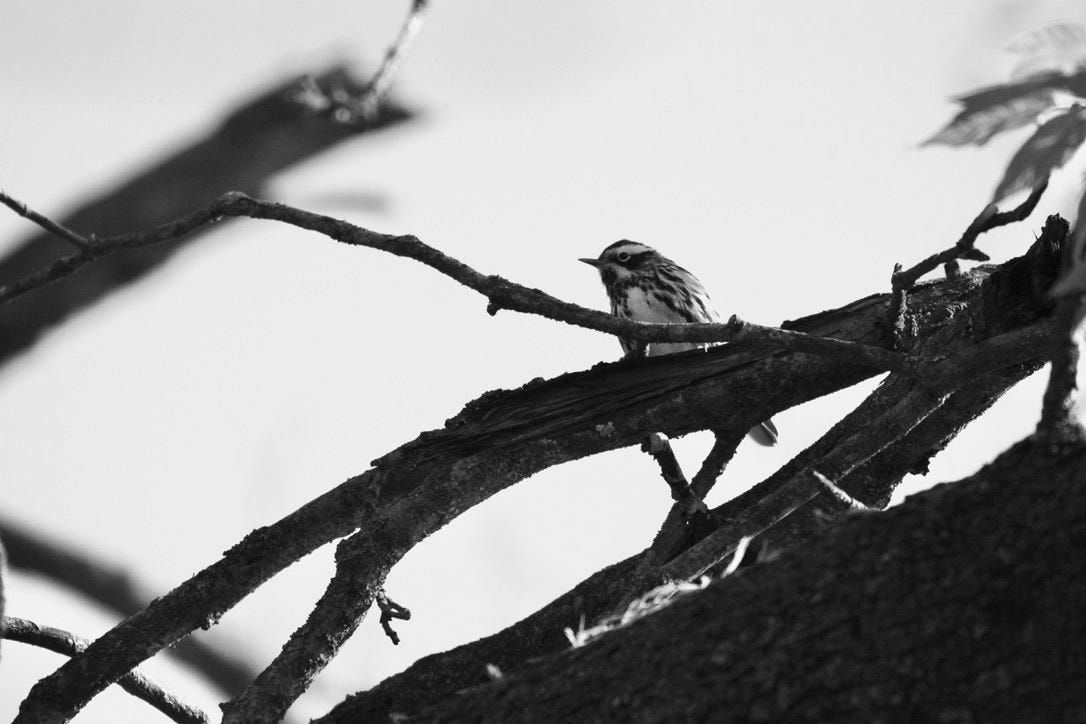
Another early reference came in a brief Chicago Tribune article in 1989, noting a rather mundane Black-and-white Warbler.4 It was the warblers that were the draw—and continue to be to this day
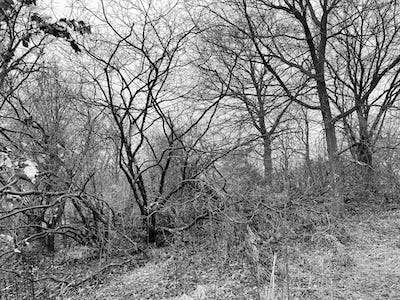
“The whole purpose of going to Montrose was doing the hedge area and the harbor looking for the ducks,” Stokie says. “You really didn’t do the fields, there was no prairie, you didn’t do the beach. It wasn’t a big destination, you went to Montrose to look for warblers in the hedge.”
A 1990 sighting of a Brown Pelican drew more attention to the area around the hedge.5 “This is big news,” James Landing, a trustee of the Chicago Audubon Society, said at the time. It was the first Brown Pelican in Illinois north of Quincy. The same piece went on to describe the hedge as a “clump of shrubs and bushes that birders refer to as the ‘magic hedge’ because so many birds are attracted there to feed and rest.”
In October 1998, the Chicago Tribune wrote a large Sunday magazine feature, “Avian Nation,” with the irreverent deckhead “Birding isn’t just for little old ladies anymore.”6 The story profiled several birders including Dave Johnson, Judy Pollock, Carol Nelson, Dennis DeCourcey, and Kanae Hirabayashi, a retired insurance company analyst who visited the Magic Hedge every day. “I ride my bike over there to see these beautiful creatures,” she said, “these very small bodies that have traveled thousands of miles to get here and have farther to go. It’s such a serene feeling.”
By this time a couple of sand dunes had formed over on the east end of Montrose Beach, near where the beach groomers turned around on their daily rounds. A few willows and cottonwoods had sprouted and attracted birds. It was Kanae Hirabayashi who stopped the big bulldozers from taking out the trees.
“[She] put herself in front of the trucks and said ‘stop,’” recalls birder and volunteer steward Leslie Borns. “She said ‘Don’t mow those trees’ and got them to stop mowing.”
Next time we’ll get into the story of those dunes, which more than 25 years later, are one of the more unique natural areas in all of Illinois.
Read previous posts here:


Like what you’re reading? Buy me a coffee by clicking here.

“Nikes gone, but not the battles,” Chicago Daily News, October 28, 1975.
Phone conversation, March 2, 2026.
“Winter weather can’t stop Chicago area watchers,” Chicago Tribune, December 28, 1988.
“Birding Hotspots,” Chicago Tribune, August 31, 1989.
“For enthusiasts, pelican is sighting to behold,” Chicago Tribune, May 17, 1990.
“Avian Nation,” Chicago Tribune, October 11, 1998.
For another early Magic Hedge story, from 2007, check out Dave Coulter’s on the old Gapers Block site.