


Thanks to everyone for subscribing to this newsletter. TWiB has just reached a milestone—3,000 subscribers including 128 paid subscribers—and I’m grateful to all of you for keeping up with my posts and for your interest in birds.
Florence Merriam Bailey’s Birds through an Opera Glass stands out among 19th-century books about birds. Many of her contemporaries—think Robert Ridgway1 and Charles Cory—were focused on creating compilations of bird species, much like those of Sibley, Peterson, and Kaufman. While those works were driven by dry description, Bailey’s work is overflowing with vivid detail and delight in being outdoors. Bailey writes with a joyousness that’s palpable and jumps off the page even 137 years later.
Bailey didn’t travel far for her sightings—most are from her childhood home in Locust Grove, New York, or from Northampton, Massachusetts.2 She came from some wealth—her father was a congressman—and so she had the means to spend so much leisure time in the field. Her books became about appreciating nature as much as anything, and she wrote for a general audience in mind rather than the sometimes stuffy scientific community.
So let’s take a moment to enjoy some of Bailey’s writing about springtime, as we are in the midst of the same season that captured her imagination.
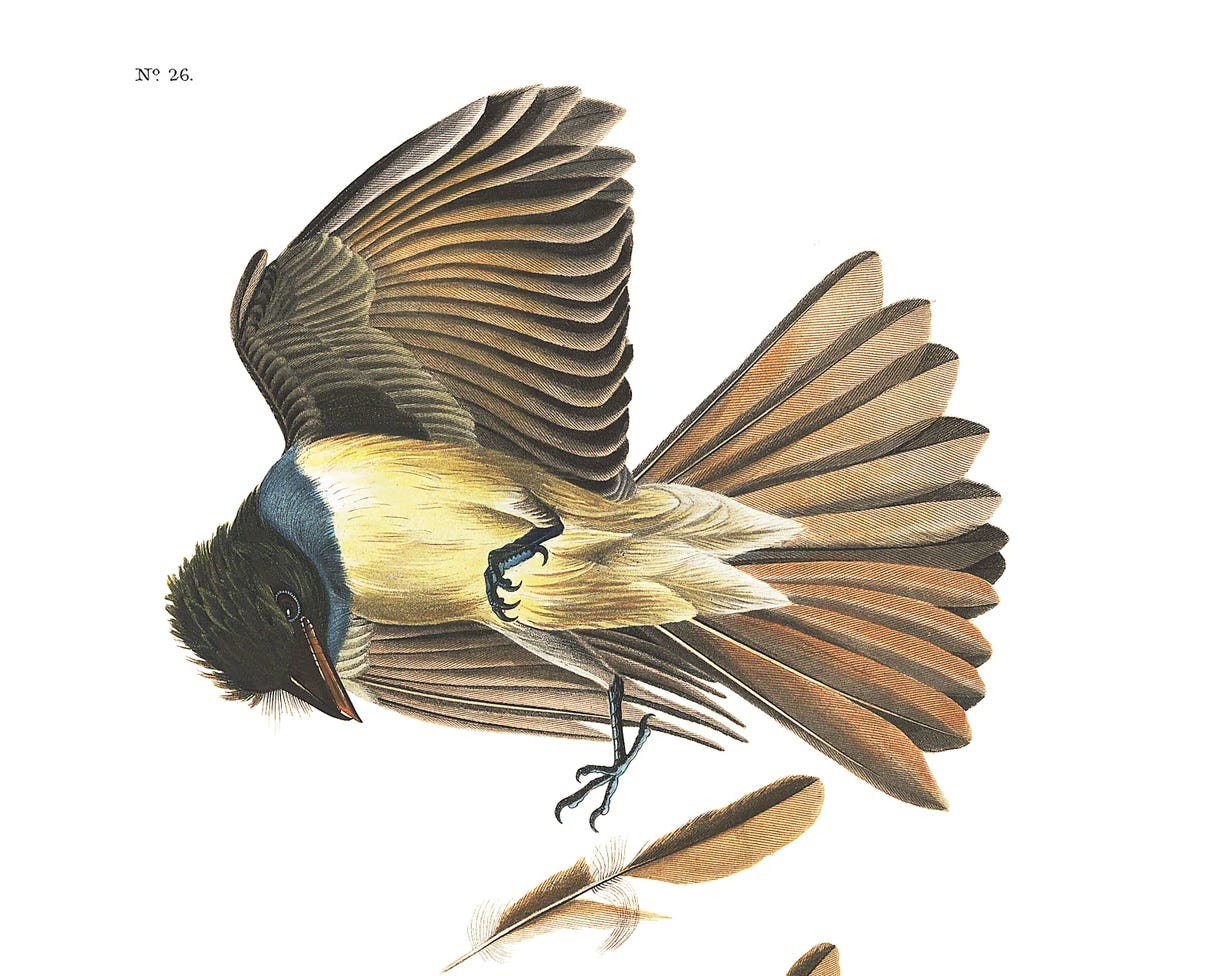
Great Crested Flycatcher
“In spring, when a loud piercing whistle comes shrilling from the woods—one note given in rising inflection—I know that the great-crested flycatcher has arrived. There is always an excitement about the event that prompts you to seize your hat and rush out to find him. And a sight of him up in a tree top is worth more than one walk!
What an aristocratic bearing his great crest gives him! And look at his olive coat, his ash-gray vest, and his bright sulphur-yellow knickerbockers! You almost expect him to produce wig and shoe-buckles!”
I have to say I think Great Crested Flycatchers are pretty cool, too.
Yellow-throated Vireo
“The name of this beautiful bird calls up college days, for my first memory of him is a picture of one of the fairest May mornings upon which a Connecticut Valley sun ever rose. Dandelions were just beginning to dot the tender grass, and the air was full of busy travellers stopping on their northward journey to see the beautiful old New England town that the bird-voiced Jenny Lind christened the ‘paradise of America.’”
What’s nice about this is it’s not just the bird—it’s the tranquility of a western Massachusetts hamlet in springtime.
The Bluebird
“As you stroll through the meadows on a May morning, drinking in the spring air and sunshine, and delighting in the color of the dandelions and the big bunches of blue violets that dot the grass, a bird call comes quavering overhead that seems the voice of all country loveliness. Simple, sweet, and fresh as the spirit of the meadows, with a tinge of forest richness in the plaintive tru-al-ly that marks the rhythm of our bluebird’s undulating flight, wherever the song is heard, from city street or bird-box, it must bring pictures of flowering fields, blue skies, and the freedom of the wandering summer winds.”
Spring comes and goes fast around here, and a bluebird appearance is always a thrill.
Song Sparrow
“In the spring the song sparrow comes North a few days after the robin, and although the chill from the snow banks gives him a sore throat that makes his voice husky, you may hear him singing as brightly as if he had come back on purpose to bring spring to the poor snow-bound farmers. Even his chirp—of rich contralto quality compared with the thin chip of his cousin—has a genuine happy ring that raises one’s spirits; and when he throws up his head and sings the sweet song that gives him his name, you feel sure the world is worth living in.”
On an eye-wateringly cold day, the Song Sparrow is indeed a fresh sound of spring.
What strikes me most from these descriptions is how much Bailey was in the moment. No cell phone, no distractions, no camera. Her opera glasses would have afforded something like 2X magnification and yet the observations are no less exciting than those seen through modern-day optics.
Like Angelia Kumlien Main, Bailey chronicles her personal observations in a way that is less beholden to the dreary wording of hard science. Further, she makes the idea of hearing a Song Sparrow truly appealing, “you feel sure the world is worth living in.” The enthusiasm of Florence Merriam Bailey remains contagious to this day.
Birds, Art, and People
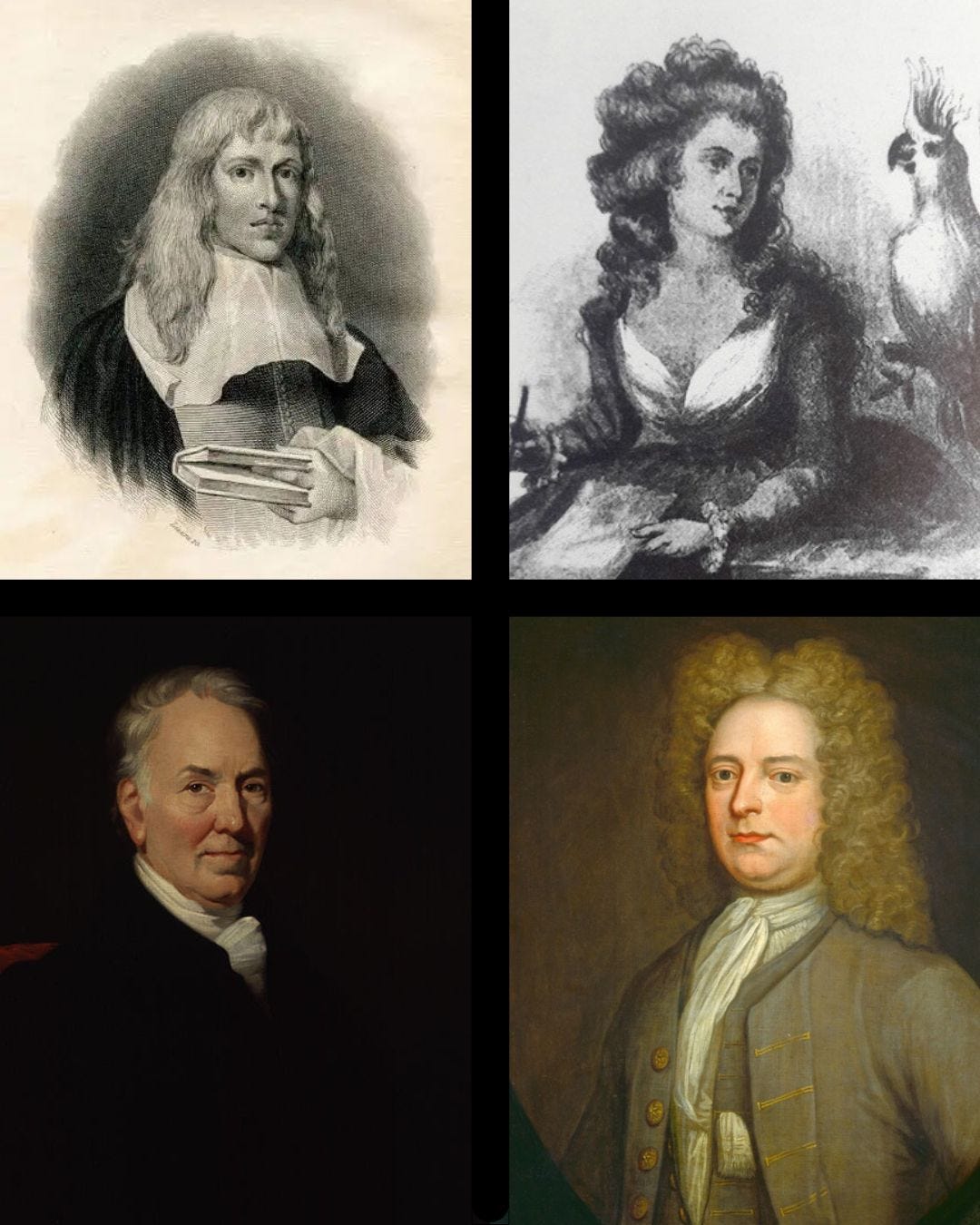
New class alert! I’ll be teaching a class at Chicago Botanic Garden this June, on Mondays starting June 8. Curious about the intersection of birds, art, and history? Birds in art do not begin and end with John James Audubon. Delve in and learn about the stories of various birds through historic materials, including the works of Francis Willughby, Mark Catesby, Thomas Bewick, Sarah Stone, and lesser-known figures in bird conservation such as Wisconsin’s Kumlien family. Examine the evolution of game laws and conservation in the late 19th century while discovering more about various species including the greater prairie-chicken, American golden plover, piping plover, and eastern pewee.
This class is something of a re-run of the class I led at the Newberry in August of last year. There’s some new material, though, and we’ll also have the chance to visit the garden’s Lenhardt Library to view some rare natural history works.
Sea Rocket is back…
…and all is right with the world. Imani and Sea Rocket have reunited at Chicago’s Montrose Beach.
Ridgway provided the illustrations for Bailey’s book, interestingly enough—and for Angelia Kumlien Main’s Bird Companions decades later.
Bailey is new to me. Thanks for sharing a bit about her and a little of her writing.
Great Crested Flycatchers have been elusive to be until this year, when I heard two yelling at each other in the trees at a biking trailhead. One had a feather in its beak! I wonder if they'd been fighting...