


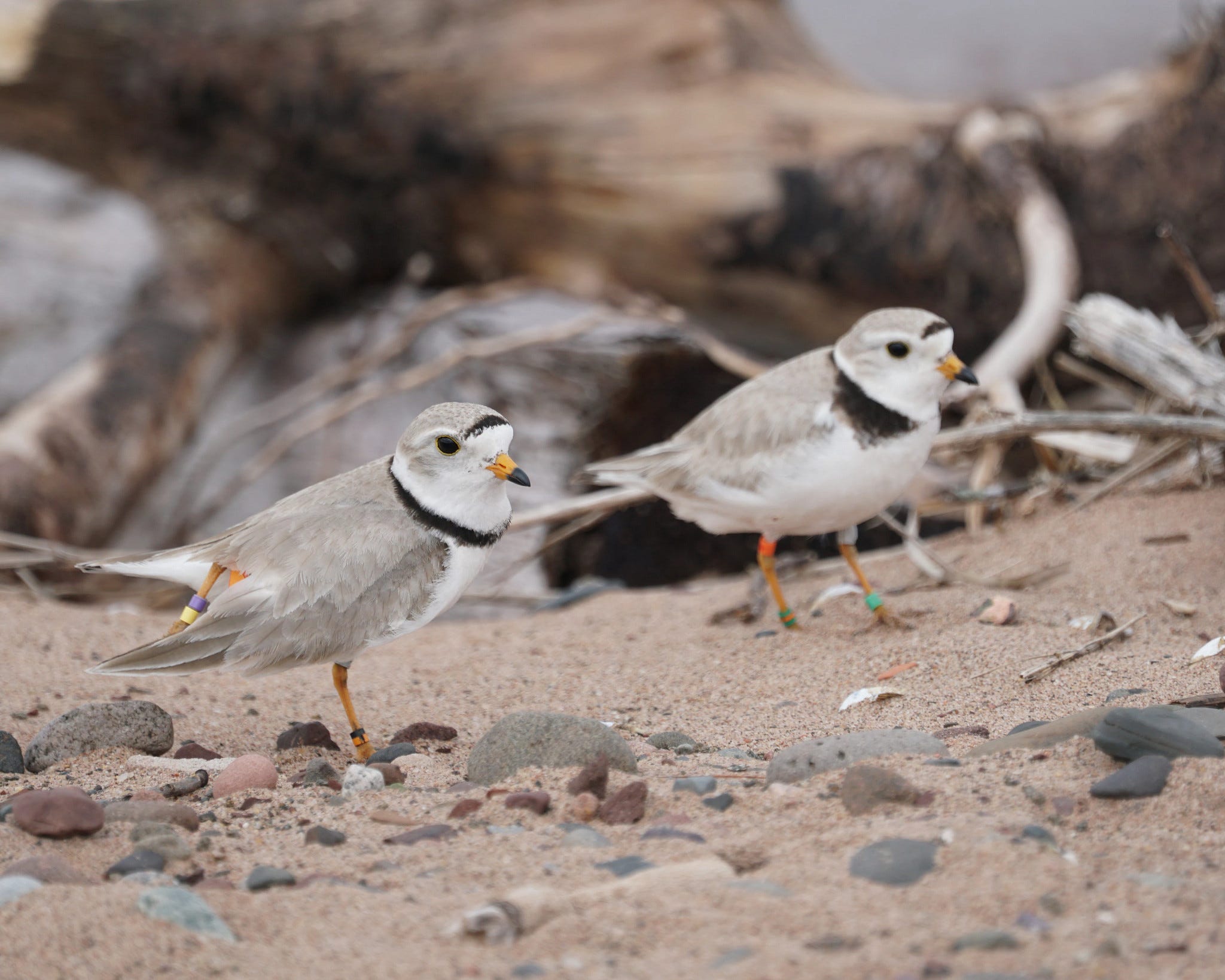
Wisconsin Point has long been one of the more interesting birding areas in the Badger State. When combined with neighboring Minnesota Point and Park Point Rec Area, the site makes up one of the largest freshwater sandbars in the world1, separating the open water of Lake Superior from Allouez Bay.
Last year, we featured the story of plover monitor Mikayla Erickson and St. Louis River Alliance’s efforts to bring Piping Plovers back to the point. Mikayla and the alliance were hopeful even though plovers hadn’t nested at the site in nearly 50 years. It might seem far-fetched, but it is possible to attract plovers with just the right habitat—see the efforts here in Chicago at Montrose Beach Dunes—and at Wisconsin Point much work was done to create just the right ecosystem. “My goal is to keep this site beautiful,” Mikayla said last year.
So maybe it shouldn’t be a surprise that a pair of Piping Plovers landed at Wisconsin Point and nested there this summer. The birds created several nest scrapes using the crushed shell and cobble that had been purchased locally and spread by hand.
In a web post, Kris Eilers of St. Louis River Alliance (SLRA) commented:
“This first nest is an emotional event after working 14 years to create a safe and attractive place for the birds to nest. We are so grateful for all the partnerships and especially our volunteers who have contributed to the return of this special bird.”
Added Mikayla:
“There is nothing that can describe the awe you feel when they finally choose to nest in a site that was so carefully and thoughtfully created just for them.”
SLRA notes that “Wisconsin Point now joins the Apostle Islands and two sites in lower Green Bay as one of only four locations in Wisconsin supporting nesting piping plovers—underscoring just how important this protected stretch of shoreline has become.”
The Wisconsin Department of Natural Resources called the nest “a significant milestone,” and noted that SLRA volunteers supplemented efforts by “removing unwanted vegetation, managing woody debris and monitoring for piping plover activity, which dictates when a predator exclosure is deployed over the nest.”
It was a record-breaking year as there were 99 pairs of Piping Plovers nesting across the Great Lakes—the most since the population was first listed as endangered in 1986—and 11 more pairs than last year. The recovery goal is an ambitious 150 pairs. If more places make concerted, years-long efforts like Wisconsin Point’s, that goal might be within reach.
Watching the rankings
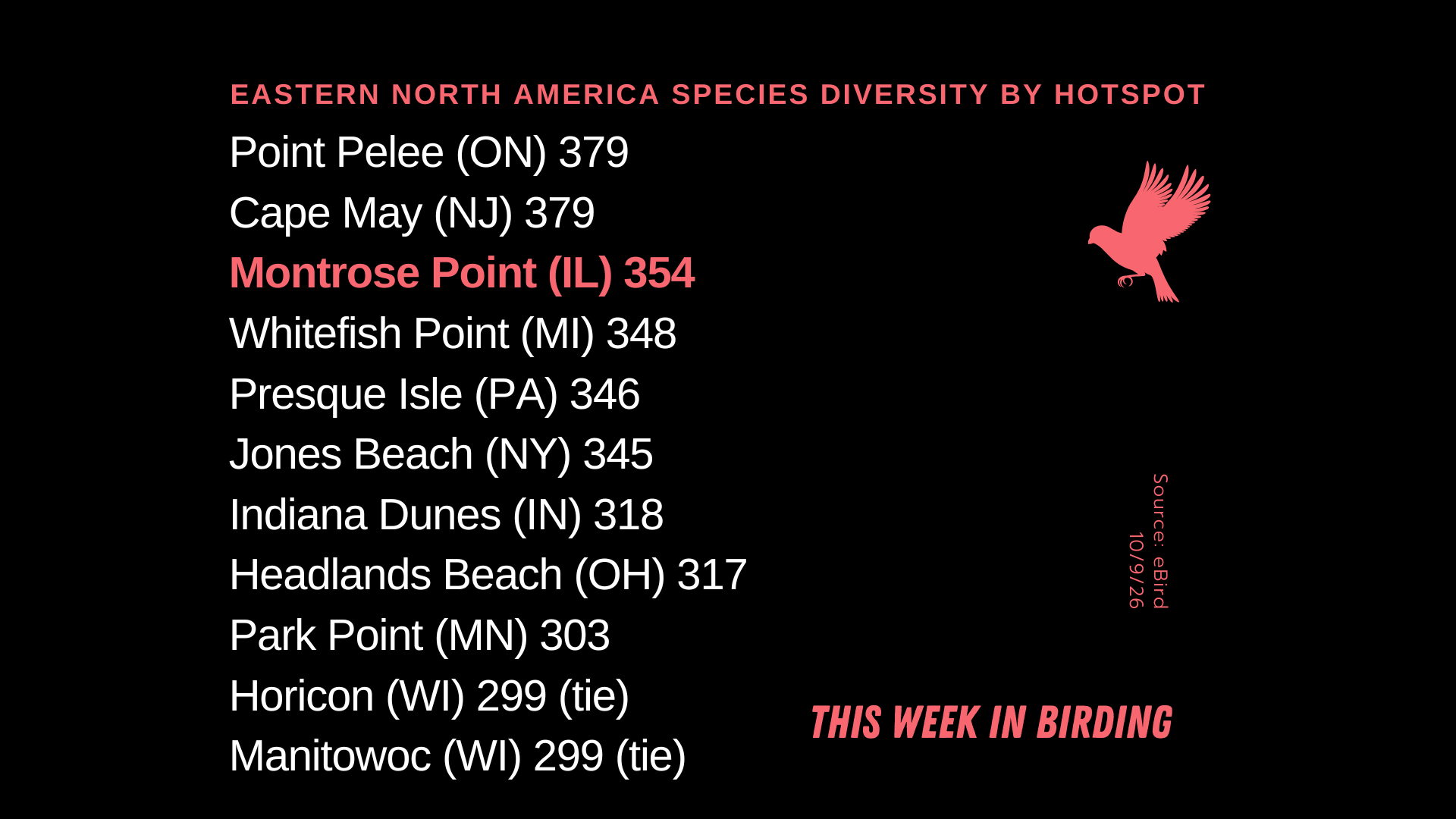
Longtime TWiB readers might recall that I like to keep tabs on species counts at some of the birding hotspots of eastern North America.2
Now we have an update to Wisconsin’s hotspot rankings. Horicon National Wildlife Refuge, one of the largest freshwater marshes in the United States, recently tied the Manitowoc lakefront for the No. 1 birding spot in the Dairyland. A Lark Sparrow seen on May 22 appears to be the site’s 299th species. Rounding out the top five are Harrington Beach State Park (287), Wisconsin Point (286), and a tie between Lake Park (282)3 and Wind Point (282).
Maybe the weirdest recent addition for sites on this list was a WILLOW PTARMIGAN, Alaska’s state bird, at Pennsylvania’s Presque Isle State Park, earlier this year.
Banking on it
A new birding documentary takes a close look at an often-overlooked species and one that’s on the decline in the United States. “Beyond Our Senses: Bank Swallows,” by filmmaker David Busse, is a beautiful portrait of a massive nesting colony on a Lake Michigan bluff in Wisconsin. Check out the trailer here. “Beyond Our Senses” will be shown in planetarium format at Cernan Earth & Space Center in River Grove, Illinois, in October and November.
Enjoying these posts? Not ready for a Substack subscription? Buy me a coffee through BuyMeACoffee.com. It’s a simple, low-cost, and one-time way to support my work.

Source: St. Louis River Area of Concern, Wisconsin DNR.
Note this ranking simply takes the top locations by species counts and doesn’t factor in locations with multiple hotspots in eBird. Cape May is a good example of this. Someday I’ll calculate everything in a more refined fashion.
Speaking of Milwaukee’s Lake Park, Christopher Cantwell has a really nice look back at its history in his new Substack.
I always enjoy your posts, but this wonderful piping plover success story brought me to tears. The news is relentlessly bad these days. But these small triumphs give me hope.
And no surprise to see Montrose as a top birding hotspot. All you have to do is spend a morning there in early May to witness the miracle yourself.
Thanks, Bob!