


The 2021 breeding season was a tough one for Piping Plovers Monty and Rose. They lost their first clutch of four eggs to a skunk attack, which meant that nesting would be delayed for several weeks. They then re-located to a part of the beach that was perhaps safer but also closer to an aggressive Killdeer pair. Rose went on to lay four more eggs, but the travails didn’t end there.
Eventually three of the eggs hatched by July 8. The fourth, though, was left unhatched in the nest scrape while Monty and Rose took to brooding the new chicks (one of which was our current resident Imani). Wildlife officials retrieved the precious egg, and it was transported to Lincoln Park Zoo where it hatched. Within days, the “zoo baby” was returned to the beach. Chicago Piping Plovers wrote this in a season recap at the time:
Without a doubt, this was the most moving moment of the entire season: Rose rushing to Zoo Baby and immediately brooding them, and Monty later flattening in the sand and piping softly to attract the baby to him.
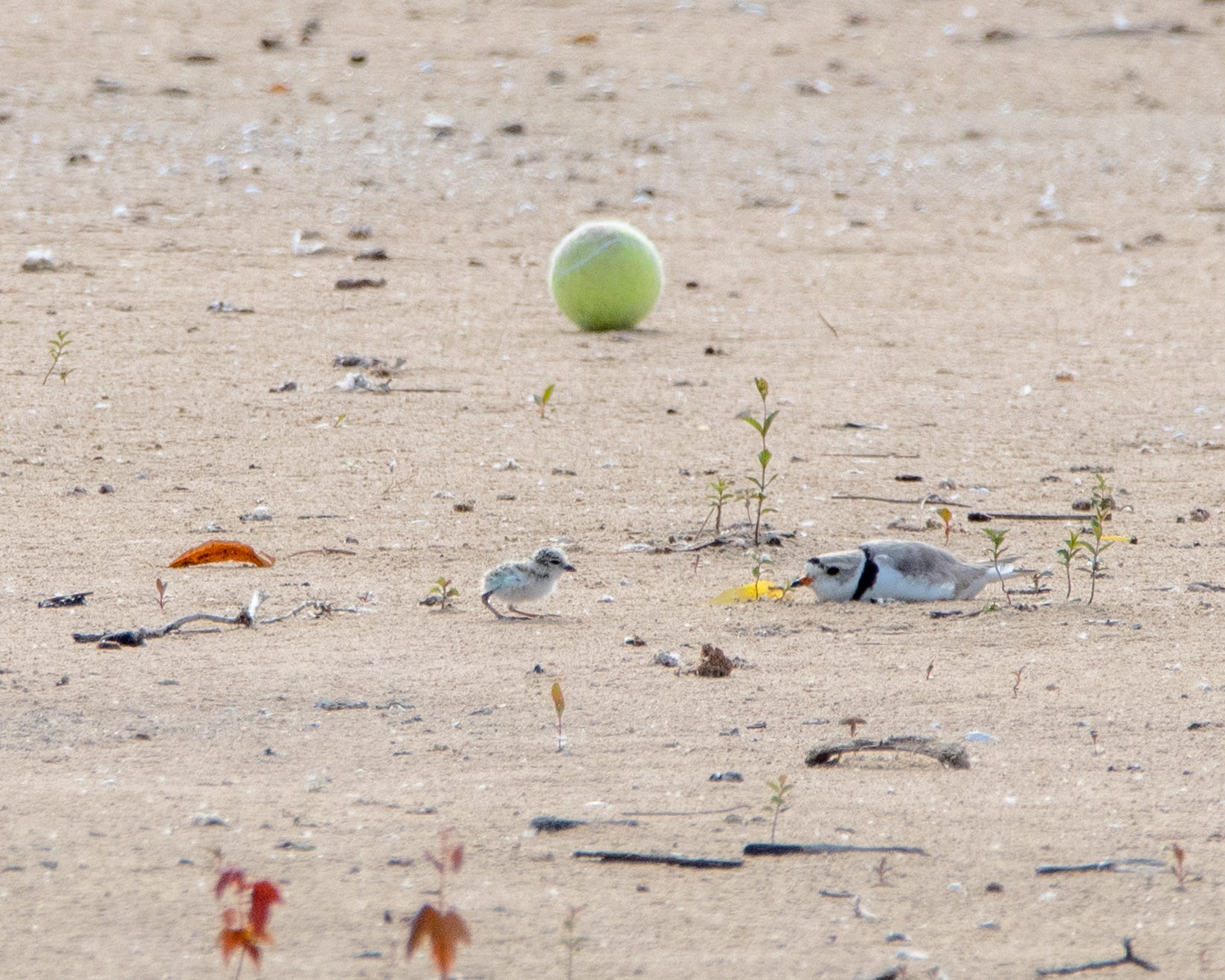
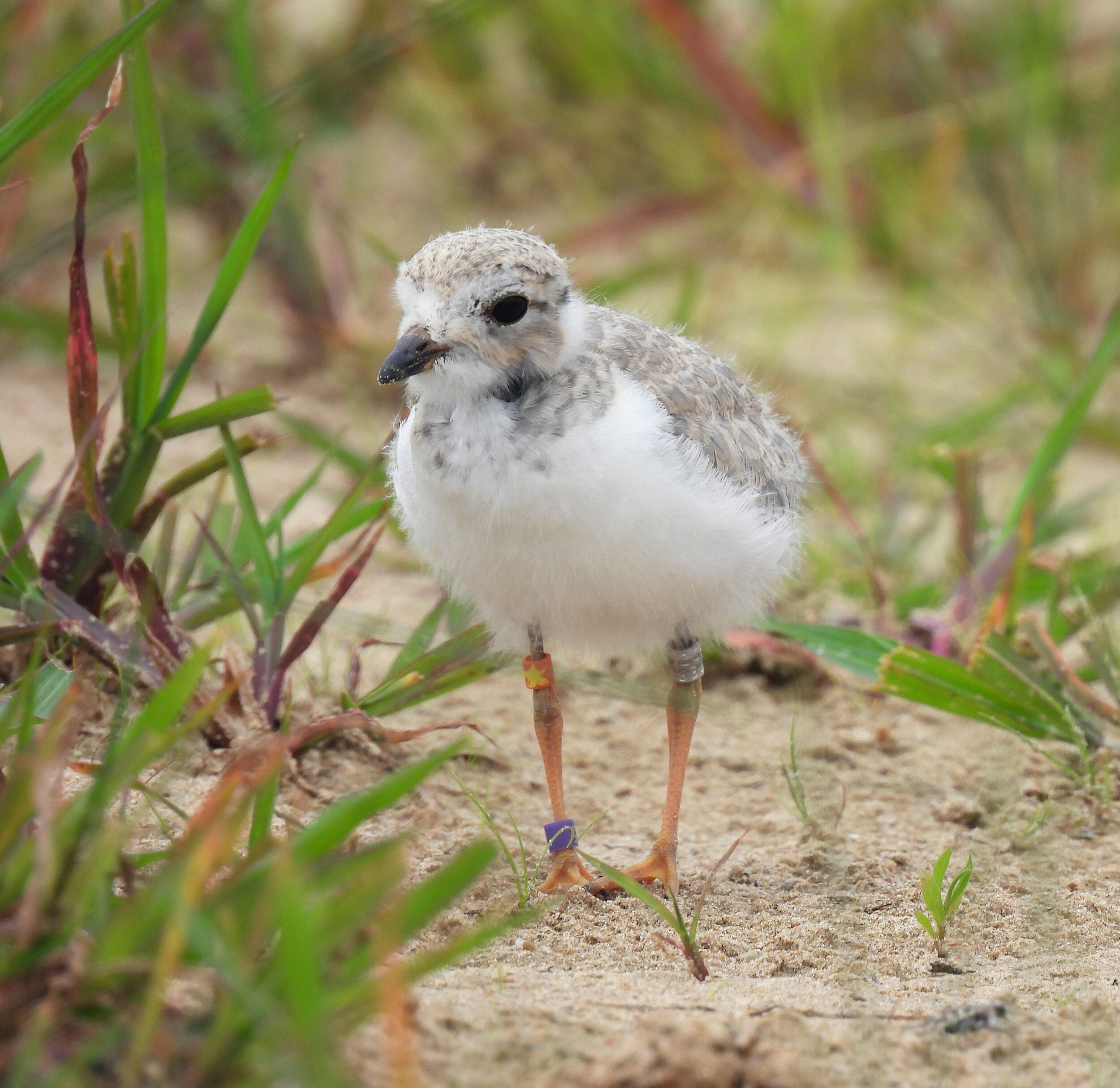
Only two of the four chicks that year—Siewka and Imani—made it to fledging. All four members of the plover family went south by the end of that summer, but Imani and Siewka weren’t seen during the winter of 2021-2022.

You might not be familiar with these plovers or with the the story of Monty and Rose. In 2019, the pair became the first to nest in the Chicago city limits in about 70 years, even as they dealt with high lake levels and a potential music festival on the beach. The Great Lakes Piping Plover population has long been highly endangered, dwindling all the way to about a dozen pairs in the early 1990s (they’ve since rebounded). The dapper plover pair inspired an entire metropolis with their resilience and their parenting skills.
Monty was the first of the plovers to return in 2022 and passed away suddenly that May. It appeared Chicago would be embarking on a summer without plovers, as Rose hadn’t appeared and Imani and Siewka’s whereabouts were unknown. Then something truly unexpected happened, just one week after we lost Monty:


Here’s what I wrote then:
It was an unbelievable turn of events. Not only was Imani still with us, but he was enjoying a Lake Superior beach about 500 miles north of Chicago. Piping Plovers face much mortality in their first year, including many risks during winter and migration. And Friday was National Endangered Species Day no less.
Then there was another astonishing chapter days later in 2022, when Imani returned home:
Last week Imani abruptly showed up back at Montrose Beach, where he hatched last year and fledged along with Siewka. Imani’s still there as of yesterday, too, though there’s no sign of a female around as a potential mate.
Imani hung around long enough to be present during the commemoration of Monty and Rose and their offspring that took place at the beach Wednesday. Despite the threat of severe weather, more than 100 volunteers and plover fans attended the ceremony at the Montrose Beach House.
Imani remains the only bird hatched at Montrose Beach who’s returned to Montrose Beach (Siewka never made it back). He’s gone on to nesting success in 2024 and 2025 with Sea Rocket, a bird transplanted to Illinois from a rescue in upstate New York. Imani and Sea Rocket fledged Nagamo in 2024 and Bean and El in 2025.
Imani is back at Montrose Beach right now, having returned last week along with wingman Pippin, an unpaired male from Green Bay, Wisconsin. We hope Sea Rocket is not far behind, and maybe we’ll get a surprise appearance by one of their offspring.
As Imani approaches 5 years old—and the median life span for Piping Plovers—it’s a moment to look back at that challenging summer of 2021 and think about the impact it made. Imani continues to write the next chapter in the story of Chicago’s Piping Plovers, even though Monty, Rose, and Siewka aren’t around to see it.
Enjoying these posts? Buy me a coffee to make a one-time contribution. Your support makes This Week in Birding possible.

Preparations for 2026 season
I was recently asked whether there is an organized effort to protect the plovers. It was a reminder that not everyone is aware of all that goes into the Piping Plover project here in Chicago. It’s a mighty effort that spans local, state, and federal agencies, as well as several nonprofits and the regional Great Lakes Piping Plover Conservation Team. It’s likely the plovers could not have been successful all these years without many humans helping out.
This year there’s already been a clean-up (above) and a shorebird outreach day at the beach. There is a full complement of volunteer monitors ready to observe the plovers and educate the public. Donations have made it possible to have a volunteer outreach coordinator this summer and an education and outreach intern. Among their duties are informing dog owners about the regulations on the beach—dogs are prohibited whether on- or off-leash. Then there’s keeping tabs on the plovers and ensuring people stay away from any nest site.
Click here if you would like to donate to the project and help out Chicago Piping Plovers this season.
Read my series on the history of Montrose Point, starting with this post:
“Baby dunes” became haven for endangered species

Previous posts on this topic are here (The Army settles in at Montrose Point), here (When the lakefront was for warbirds), here (When Montrose was for bathing), and here (The Magic Hedge takes shape).
I love all of the information in your newsletters, but nothing will ever top learning about Zoo Baby! 🥰 Donation made since I no longer live in the Chicago metro area to volunteer in person. Thank you.
OMG, this is the first I've read of the zoo baby adoption. And I thought I knew what there was to know about this incredible story.