


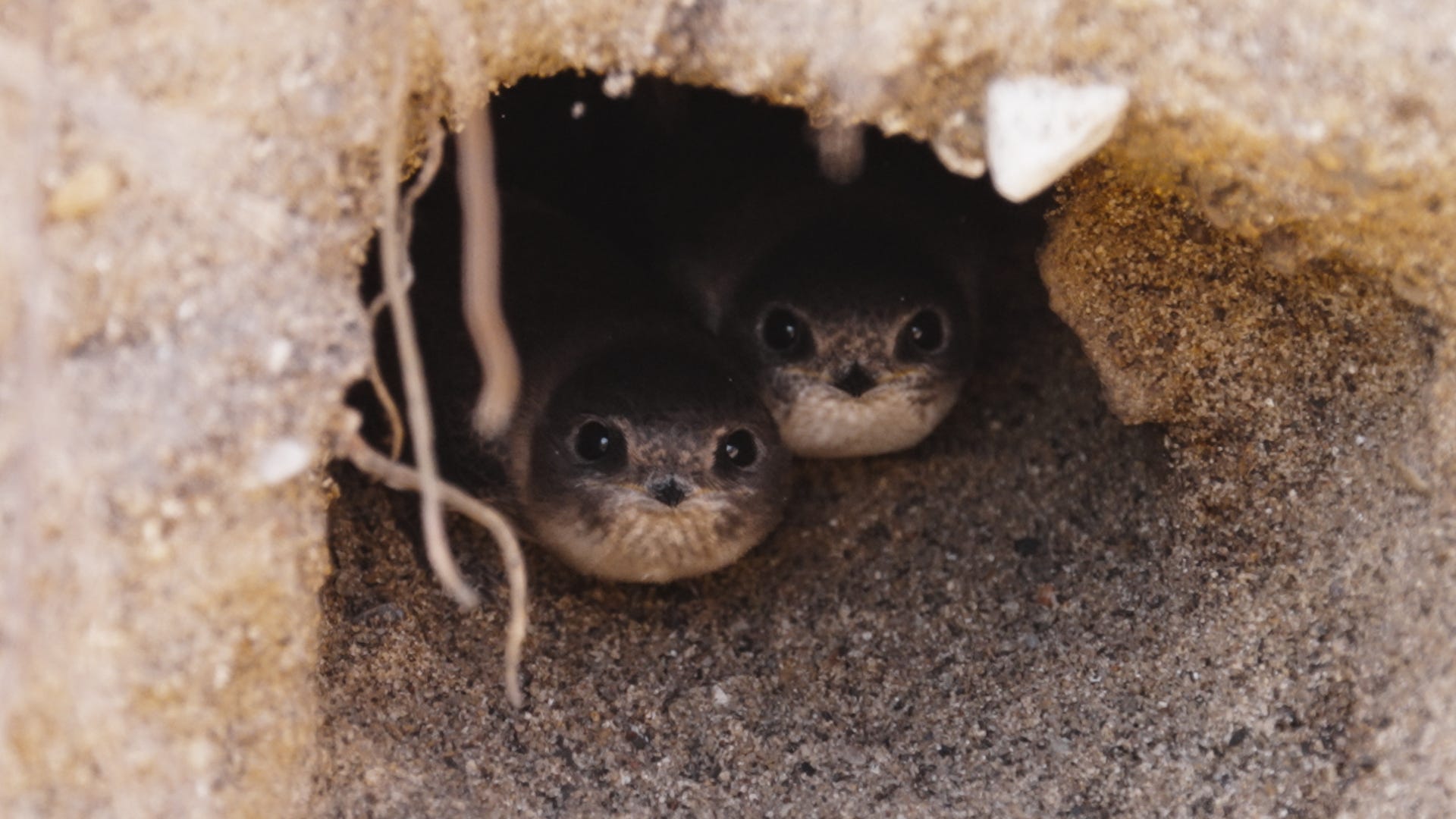
The new nature documentary, “Beyond Our Senses: Bank Swallows,” is an extraordinary portrait of a single Midwestern species and ties the birds’ story to how we and other creatures perceive the world. Stunningly shot on one Lake Michigan bluff, the film features a “city of swallows” and some surprisingly dramatic moments during the birds’ life cycle. Recently we caught up with filmmaker David Andrew Busse, a four-time Chicago/Midwest Emmy Award-winning video producer and filmmaker based in Wisconsin.
TWiB: How did you get into the Bank Swallows’ story, or become aware of the colony?
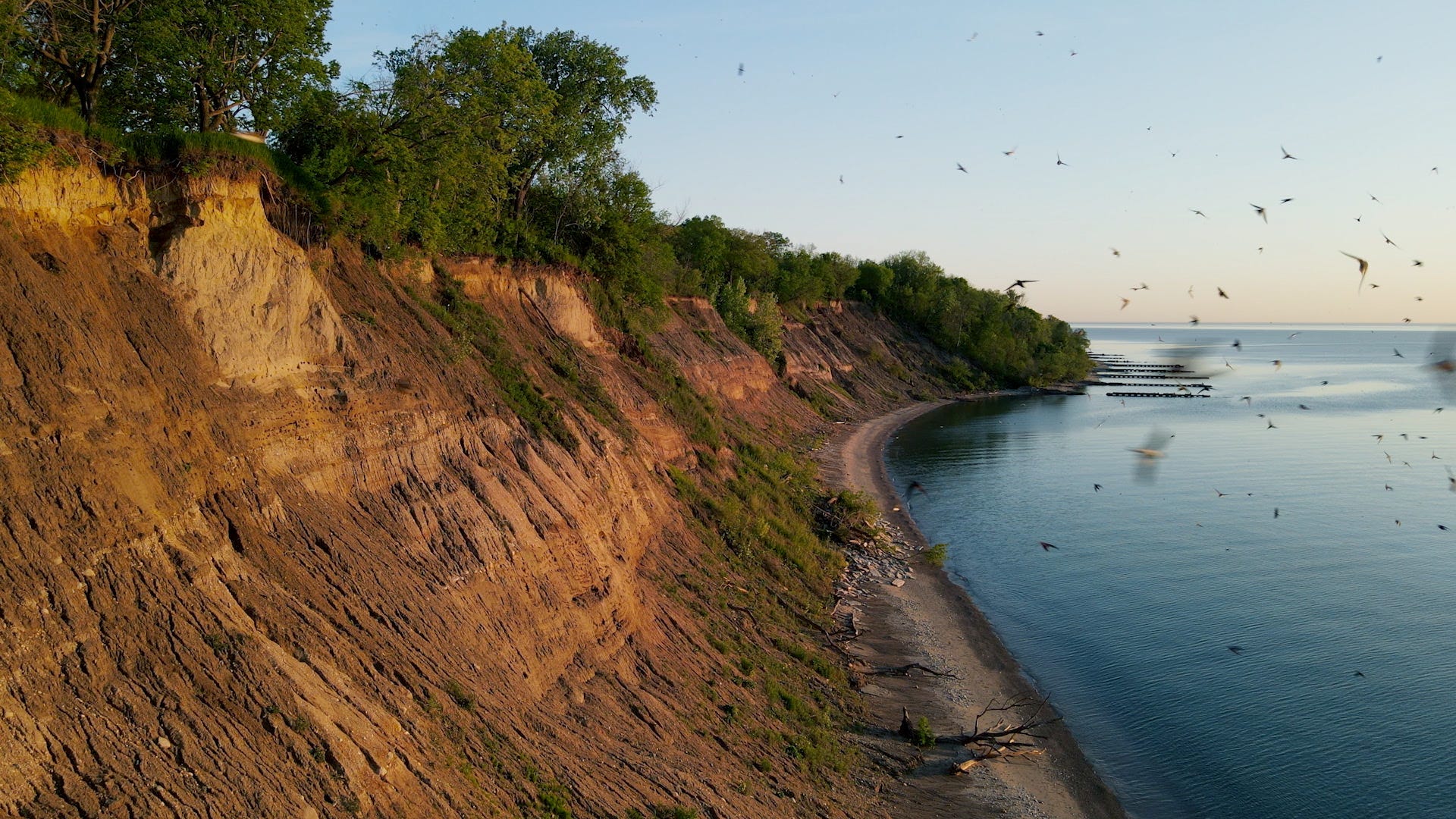
DAB: I first discovered this colony when I went to a Milwaukee County park to take photos of Lake Michigan. I walked out to the edge of the bluffs and I saw thousands of birds swirling over Lake Michigan, diving to and from the bluffs in a scene that I found both incredible and chaotic. At the time I was not a birder so I had no idea what type of bird they were and I was fascinated seeing this huge group of birds thriving so close to Milwaukee. I left that day knowing that I wanted to film their colony, but it would be a few years before I began.
When I started filming I thought it would just be for a few days, but every time I filmed I discovered more things that drew me back.
TWiB: How much time did you spend at the beach and bluffs there?
DAB: It’s hard to say how much time I spent there, but for a while my life revolved around observing and filming them whenever I could. This was made difficult because as I worked on this project we were welcoming our first child into the world and I had a full time job, so I would most often observe them on my way to and from work and on visits to the park with my wife. I primarily filmed them at sunrise before work. Over the course of three summers, I filmed them for about 30 mornings total and made countless trips to observe. The first summer was spent gathering as much footage as I could and the following two summers I was filming the scenes I had previously missed.
TWiB: I don’t think I’ve ever seen shots of the Bank Swallow nest from a “burrow cam.” How did you get those?
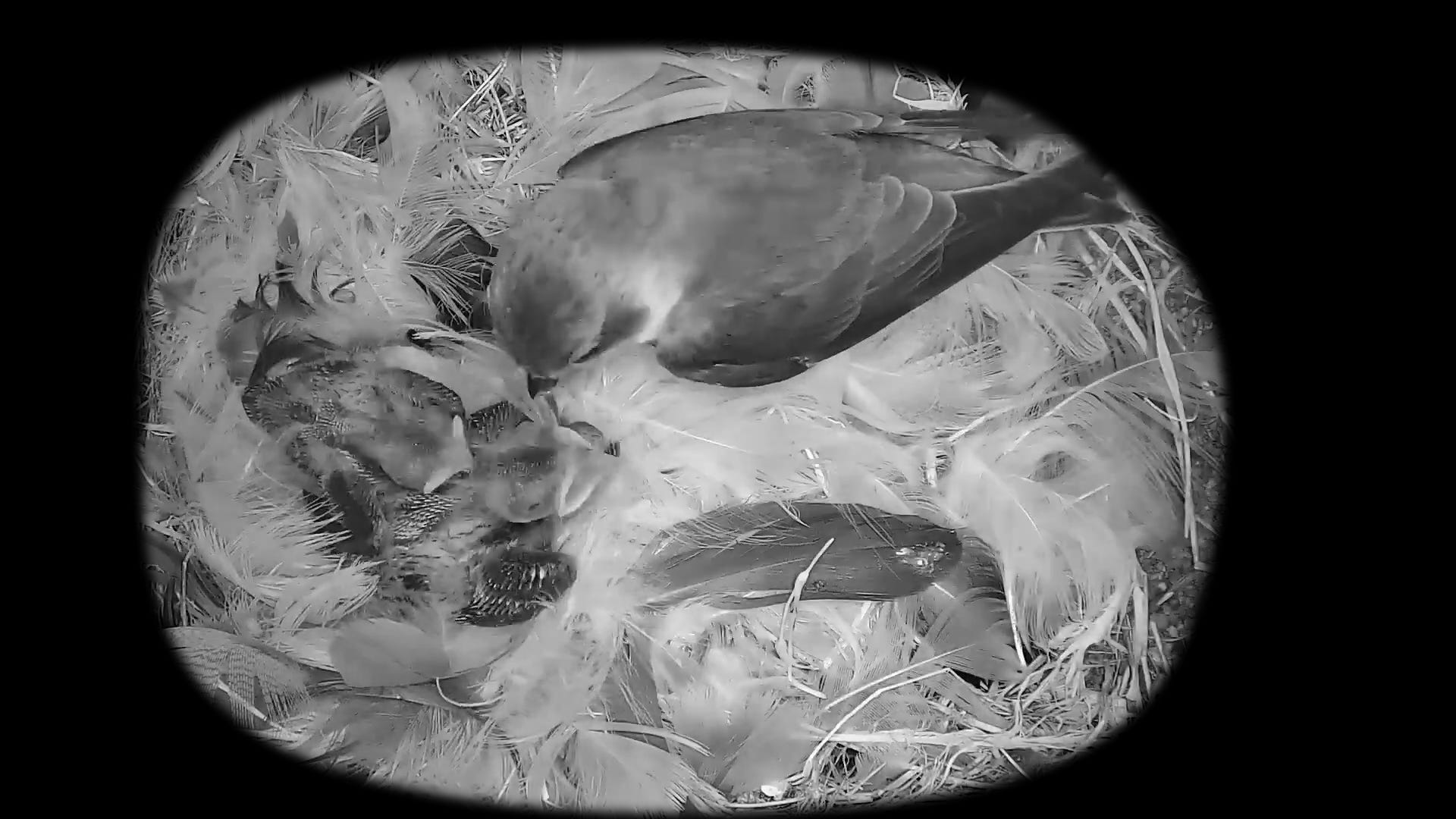
DAB: One of the challenges of this project was working within my limitations and trying to find creative ways around them. In this case, I spent many hours trying to figure out how to place a nest cam on the bluffs, but couldn’t think of a way to do it without causing erosion and threatening their nests. Unfortunately for me, to do it the right way would require buying a pricey camera, pulling a permit from the park system, building an artificial burrow, and hoping a nesting swallow would actually use my artificial burrow. So I decided to see if anyone else might happen to have filmed nesting bank swallows. Luckily, I found a live stream of a bank swallow nest cam on Youtube that was being broadcast from Harper’s Island Wetlands in Cork, Ireland. They were able to capture this footage because they built a nesting wall with 24 burrows for bank swallows. I reached out to them and they graciously allowed me to use their footage. Little did I know that the most dramatic moments in the film would be happening inside of their nesting boxes.
TWiB: You could have picked any number of species to demonstrate “senses.” Did you think of the Bank Swallow first or the “senses” theme first?
DAB: When I sat down with the 40ish hours of footage I captured and began sorting it, I felt that it didn’t quite capture what I found so fascinating about the swallows. I realized that I was going to need a story element so that audiences would hopefully share in the wonder that I felt watching them. As I learned more about the swallows, I began to appreciate more how their inner world is vastly different from ours. Plus, I’ve always been interested in perceptions and am a fan of shows like Radio Lab and other science shows that seek to spread wonder about our world. I figured that visualizing their perceptions in a story-driven way could create a sense of wonder for viewers and better share how fascinating these overlooked birds are.
“Beyond Our Senses” will be shown in planetarium format at Cernan Earth & Space Center in River Grove, Illinois, in October and November. Check out the trailer here.
Enjoying these posts? Not ready for a Substack subscription? Buy me a coffee through BuyMeACoffee.com. It’s a simple, low-cost, and one-time way to support my work.

A sparrow song spreads east
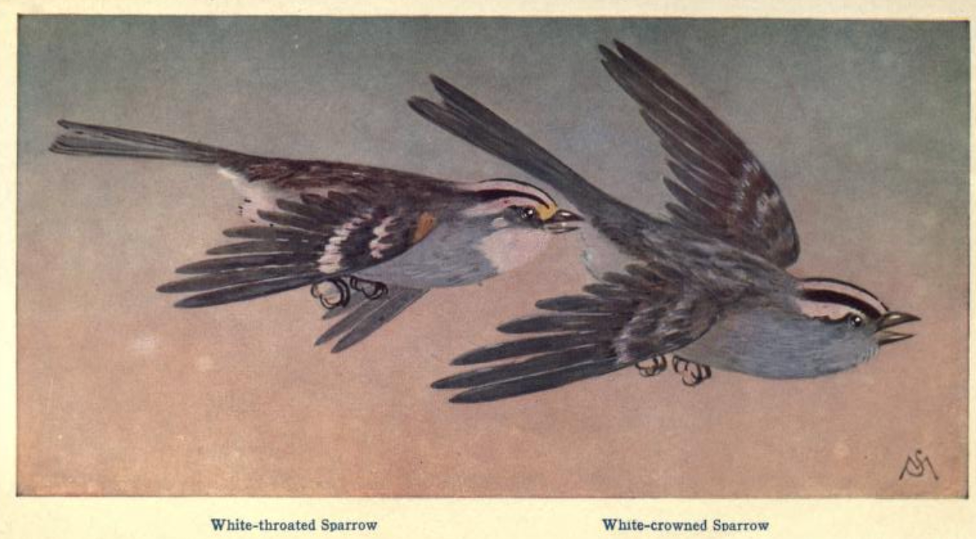
They’re a little more quiet in fall, but White-throated Sparrows have one of the more familiar songs in North American birding—and one of the most paraphrased. Just check out these:
Old Sam Peabody Peabody Peabody.
Pure Sweet Canada Canada Canada.
Oh Sweet Cana Cana Cana.
All Day Long Fiddlin Fiddlin Fiddlin.
So Wheat, Peverly, Peverly, Peverly.
Oh hear me, Theresa, Theresa, Theresa.
Which one did you learn first? For me, it was Pure Sweet Canada and later Old Tom Peabody.
White-throats’ songs have been well-studied. Schuyler Mathews, in his 1904 tome Field Book of Wild Birds and Their Music, noted how the birds in northern New Hampshire had a different song than those on Canada’s Prince Edward Island. The Canadian birds elided the second syllable and went right to the Canada Canada Canada.
A study from a few years ago, shared by the Cornell Lab, shows that the sparrows’ song continent-wide is changing. Listening to historic recordings, researchers found that the song in the west had a truncated Oh Sweet Cana Cana Cana before about 2000. Now that song has moved east, and the suspicion is that eastern birds picked up on shared wintering grounds.
I personally haven’t noted this much, and don’t see this showing up in recent recordings on Xeno Canto, but I’ll trust the researchers. It’s something to keep an ear out for when the sparrows are moving through and singing next spring.