


One thing you can count on in Chicago summertime is the lake breeze. Lake Michigan and its 300-mile expanse act as a sort of natural air conditioner when the wind is blowing just right. It doesn’t happen every day, but when it does the lake-chilled air is delightful.
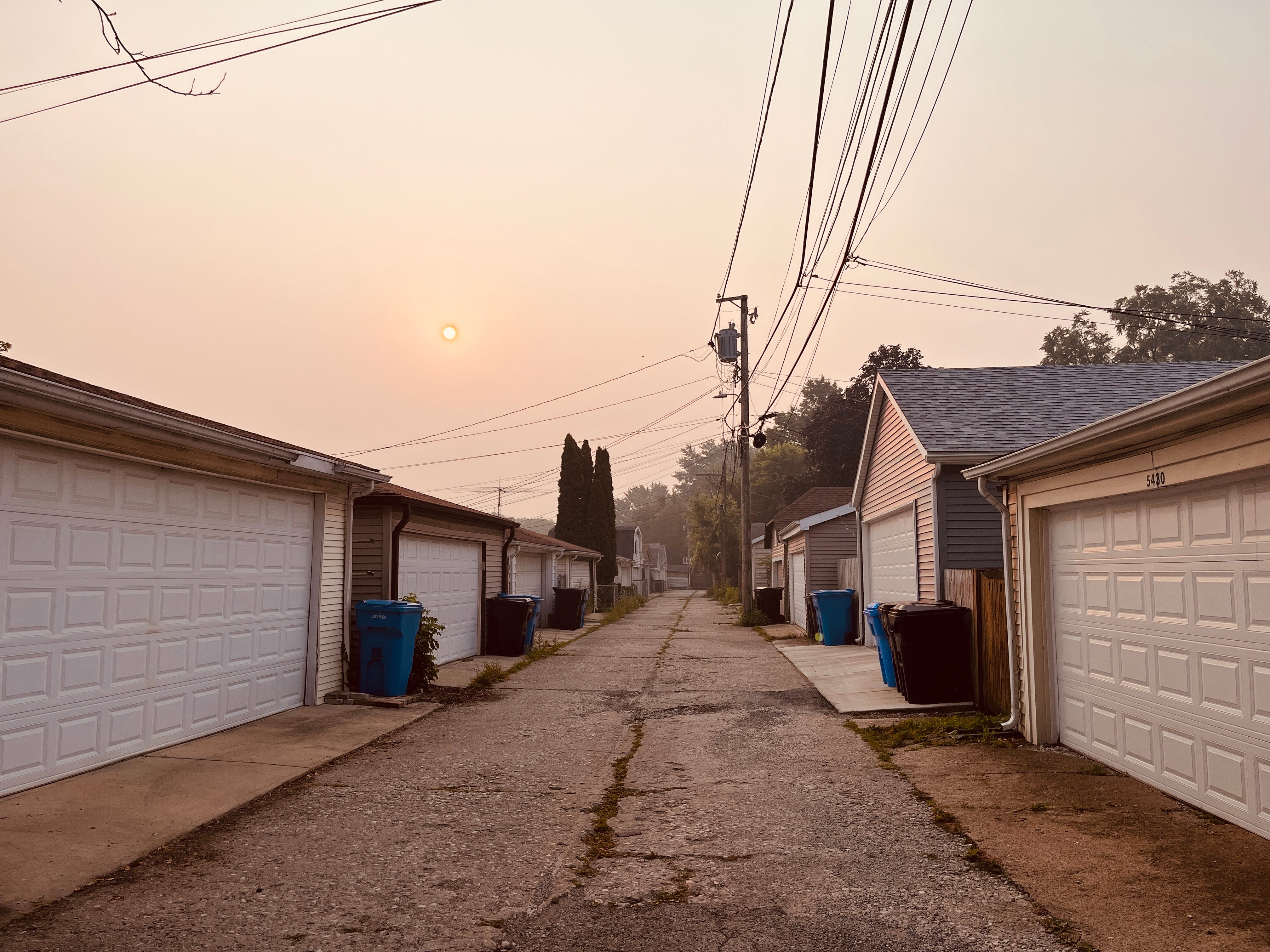
On the afternoon of July 16, though, that lovely lake breeze turned against the city. The smoke from wildfires in Canada and Minnesota, places like the Boundary Waters Canoe Wilderness, had drifted into place. The saturated air coming in off the lake condensed with the particulates to yield the worst air quality in the world.
It wasn’t silent altogether, but the mood was subdued. There was a stillness to the Blade Runner skies. What we really needed was a windy front to send the smoke somewhere else—an unsatisfactory solution as other people, animals, and plants will also then be the downwind victims.
The streets were empty as everyone stayed inside. Many businesses, parks, and attractions were closed. The birds that were still foraging, feeding young, looking for water, were moving around haltingly. There were a few check notes and wheezes, but no full-throated bird song.
“Blame Canada,” someone said. No, I thought. Blame the USA, too. Some of the fires were indeed originating within American borders, and the nation’s a world leader in climate and science denialism.
The beautiful boreal forest has been turned into kindling. According to The Atlantic, two of the three worst wildfire seasons in Canada’s history have taken place in recent years.1
The forests are part of Earth’s largest land biome, a greenbelt of wilderness that encircles the globe, and they’ve been suffering from the planet’s thermostat being jacked up.
Days like these make us appreciate the blue-sky days even more. Until then we grapple with the future we were warned about.
Many of the descriptions of these wildfires will portray them as far away. They aren’t far away. The Boundary Waters are about 500 miles from Chicago and a frequent destination for local vacationers. The region of Ontario affected by this disaster is about a one-hour drive from Grand Portage, Minnesota. (Though the First Nations community destroyed by the fire is a little farther north.)
When I was in the Grand Tetons in 2021 and wildfire smoke blocked all the views, the refrain was “that’s from fires in Oregon.” As if there were always fires in Oregon that kept it dim and overcast all day. Again—somewhere far away.
These boreal forests could just as well be the Wisconsin North Woods, your local prairie preserve, or the woodlot next door.
Please post any follow-up that you learn about local bird loss. I follow the air quality numbers and wonder about the impact on the local birds and animals. Clearly they are "sensitive groups" that are being impacted through no fault on their part.
Soul crushing.